
What the evidence shows
Italy introduced a restriction on covered faces during school activities on 1 October 2026. How many pupils does it affect? The sources we checked cannot give a reliable national answer. A school case has been documented, so missing figures do not mean there are no cases. But a widely repeated estimate of 500 to 600 pupils is built from assumptions, rather than a count collected from schools. The rule also does not cover a headscarf that leaves the face recognisable.
- The school restriction took effect on 1 October 2026, with specified exceptions.
- A headscarf that leaves the face recognisable falls outside this rule.
- A documented school case shows face veils are worn, but cannot tell us how many pupils wear them across Italy.
- The repeated 500-to-600 figure is an estimate based on assumptions, not a national school count.
What Meloni announced, and what became law
Giorgia Meloni announced school restrictions on burqa and niqab at the Fenix event in Rome on 20 September 2026. Her verified Instagram account posted the identified clip that day, and her official website also links it.
The school provision appeared in Decree-Law 170/2026 on 30 September and took effect on 1 October. At our evidence check on 7 October, Parliament was still considering the bill to convert the decree into law. The decree was already in force while that process continued, so the restriction was more than a proposal.
We did not verify a national pupil total in Meloni's clip and do not attribute the 500-to-600 estimate to her. Our question is how many pupils the school rule affects, not whether she personally stated that number.
Sources: Giorgia MeloniGazzetta UfficialeSenato della RepubblicaGiorgia Meloni official website
The rule concerns the face, not every kind of veil
The provision covers participation in lessons and extracurricular school activities with a covered face, or another means that prevents the face being recognised. It allows specified certified health reasons and reasons connected to teaching or training activities.
A hijab normally covers the hair while leaving the face visible. A niqab covers the lower face, with the eyes visible. The legal test is whether the face can be recognised: a headscarf that leaves it recognisable falls outside this restriction.
The administrative fine is €200 to €1,000, unless the conduct constitutes a crime. For a minor, it applies to the person with parental responsibility. The school principal establishes the violation and the prefect imposes the fine.
This is a rule for school activities. A separate Fratelli d'Italia proposal concerns wider public spaces. That proposal should not be presented as a general public-space ban already enacted by this school decree.
Sources: Gazzetta UfficialeFratelli d'ItaliaAssociated Press
There is a documented school case
On 25 September, ANSA reporter Alice Fumis interviewed a pupil wearing a niqab outside the Pertini school in Monfalcone. This is evidence of a real school case. We cannot claim that nobody wears one at school.
One local interview is not a survey of Italy. It cannot tell us how many pupils wear face veils nationally, or whether the number is rising. The pupil asked not to be photographed or filmed; we are not identifying or portraying her.
Sources: ANSA, Alice Fumis
Where the 500-to-600 estimate comes from
The repeated school figure comes from La Tecnica della Scuola. Its article starts with a population defined by foreign citizenship, then makes assumptions about religion, sex, age and face-veil use. It arrives at an assumed pool of 60,000 and applies a wearing rate described as below 1%.
This is not a count of pupils reported by schools. The article does not give the survey, sample, year or uncertainty behind that wearing rate. Starting with foreign citizenship may also leave out Italian-citizen pupils, including converts. Citizenship alone does not tell us someone's religion or clothing.
Even if the assumed pool were correct, below 1% of 60,000 would mean fewer than 600. It would not establish that at least 500 pupils wear face veils. That lower end of the range needs evidence too.
A precise-looking calculation can still answer the wrong question
We also checked the article's comparison with 320,000 classes. Using its assumed range of 500 to 600 pupils gives roughly one pupil for every 533 to 640 classes, rather than one for every 660. These are checks of the article's assumptions, not our own estimate of how many pupils wear face veils.
Even a correct average would not tell us how many classes contain a pupil wearing a face veil: several such pupils could be in the same class.
A separate CO-MAI estimate, reported by Agenpress, concerns adult women and explicitly excludes schools. Dividing an adult total by the number of school pupils would mix different groups. Neither that calculation nor an older national figure can provide a reliable current pupil percentage.
Sources: La Tecnica della Scuola, Alessandro GiulianiAgenpress, reporting CO-MAI
What we know, and what is still missing
The restriction is real. There is documented school use of niqab. The evidence we checked does not establish a reliable national count or percentage of pupils wearing burqa or niqab. That is a limit of our investigation, not proof that no other or unpublished data exist.
A useful count or estimate would need to explain who was included, when it was collected, how schools or pupils were selected, and how much uncertainty remains. Missing information cannot be treated as zero. Rounding a tiny percentage to 0.00% would not prove zero cases either.
This is why the article uses By the numbers: it explains what figures can and cannot tell us. It does not conclude that the policy is justified or unjustified, or that anyone intended to deceive. Even a reliable count would not, by itself, settle questions about rights, education, coercion or the effects on pupils.
Sources: Gazzetta UfficialeGazzetta UfficialeANSA, Alice FumisLa Tecnica della Scuola, Alessandro GiulianiAgenpress, reporting CO-MAI
What is established
- The school restriction took effect on 1 October 2026.
- It does not cover a headscarf that leaves the face recognisable.
- ANSA documented a pupil wearing niqab in a school case.
- The repeated school total comes from assumptions rather than a national pupil count.
What remains unknown
- A reliable national total or percentage of pupils wearing burqa or niqab.
- Whether that number is increasing or decreasing.
- How the restriction will affect attendance, integration or individual pupils.
- Any intention to deceive behind the announcement.
The story, in order
Meloni's announcement
The Fenix speech and identified Instagram clip announce the school restriction.
The media estimate appears
La Tecnica della Scuola publishes its extrapolation; the article is updated on 22 September.
An adult estimate is publicised
Agenpress reports CO-MAI's inquiry, which explicitly excludes the school population.
Reporting from a school
ANSA publishes its interview with a niqab-wearing pupil in Monfalcone.
The decree is published
Decree-Law 170/2026 appears in the Gazzetta Ufficiale.
The rule takes effect
The entry-into-force date stated in the official legal record.
Evidence check and first Instagram publication
TALLYCAT01 publishes its first Instagram explanation of the policy and the limits of available prevalence evidence.
YOUR TURN TO CHECK
Reproduce this investigation
Read the announcement and the published school rule, then trace each estimate to its assumptions. Keep documented cases separate from national totals.
You will need
A browser, somewhere to keep notes and a calculator
What you can and cannot repeat
There is no verified national pupil dataset in this investigation, so there is no measured national rate to recalculate. The arithmetic below checks a media estimate, not the true number of pupils. We did not independently transcribe the video's full audio. Record any source you cannot access.
Find the original announcement
Open the Instagram post and record the account, caption and date, 20 September 2026. Cross-check the clip on Meloni's official Fenix page. Before quoting speech, listen to the audio and record the exact words and timestamp.
Keep in mind Do not attribute a national numerical claim to Meloni unless you can locate it in the original material.
Check when the school rule took effect
Open the Gazzetta Ufficiale record for Decree-Law 170/2026. Record the 30 September publication date and the 1 October start date separately. When repeating the check after 7 October, look for later amendments or parliamentary conversion.
Keep in mind Pending parliamentary conversion does not mean an effective decree has no current legal force.
Read the scope, exceptions and penalties
Read all of Article 12, paragraphs 4 to 6. Note which school activities it covers, the test of whether the face can be recognised, the exceptions, the fine and who enforces it. Use the published provision rather than an earlier draft.
Keep in mind A headscarf with a recognisable face and a face veil raise different questions under this wording. Do not substitute a draft or a separate public-space proposal for the enacted provision.
Read the local school reporting
Open ANSA's 25 September Monfalcone report. Separate what the reporter observed from what interviewees said. Record the school, place and date.
Keep in mind This documents a case, not a national total or trend. Respect the pupil's request not to be photographed or filmed.
Trace the estimate to its assumptions
In La Tecnica della Scuola, list the starting citizenship population and assumptions about religion, sex, age and wearing rate. Record the source and date for each, or mark them missing. Look for the survey behind the stated below-1% rate.
Keep in mind The article was published on 20 September and updated on 22 September at 11:29. A repeatedly cited estimate does not become an independently measured count.
Repeat the calculation
Take the assumed pool of 60,000 and calculate 1%. Then ask whether a rate below that number tells you there must be at least 500 pupils. Divide the stated 320,000 classes by 600 and by 500 to check the class comparison.
60,000 x 0.01 = 600 320,000 / 600 = 533.33 320,000 / 500 = 640 A rate below 1% does not establish a lower bound of 500.Keep in mind Checking the arithmetic does not validate the assumptions or show how many classes actually contain a pupil wearing a face veil.
Check whether other estimates concern pupils
Read the Agenpress account of the CO-MAI inquiry. Find its reference to adult women and its exclusion of schools. Do not divide an adult total by school enrolment.
Keep in mind A percentage needs a count and total covering the same group, place, time and definition.
Separate facts, estimates and missing information
List documented facts, estimates and unknowns. Put the effective school rule and ANSA school case under facts. Put assumption-based figures under estimates. Keep the national pupil total under unknowns unless you find suitable data.
Keep in mind A real rule and documented cases can coexist with a missing national count. None of that, alone, establishes deceptive intent.
Sources you can check
- The identified Instagram announcementGiorgia Meloni / 20 September 2026Original social post and publication date
- Decree-Law 170/2026: publication and commencementGazzetta Ufficiale / 30 September 2026Official instrument, publication date and entry into force
- Article 12, paragraphs 4 to 6Gazzetta Ufficiale / 30 September 2026Published scope, exceptions, penalties and enforcement
- Firsthand reporting at the Pertini school in MonfalconeANSA, Alice Fumis / 25 September 2026Direct local reporting and pupil interview; evidence of existence, not national prevalence
- The school-veil estimate and its calculationLa Tecnica della Scuola, Alessandro Giuliani / 20 September 2026Origin and assumptions of the widely repeated school estimate
- CO-MAI inquiry concerning adult womenAgenpress, reporting CO-MAI / 23 September 2026An adult estimate that explicitly excludes schools
- Senate consideration of conversion bill AS2053Senato della Repubblica / 7 October 2026Parliamentary status at the evidence-check date
- Official Fenix page linking the speech clipGiorgia Meloni official website / 21 September 2026Official provenance and event context
- The separate proposal for wider public-space restrictionsFratelli d'Italia / 26 September 2026Distinguishes the party's proposed public-space ban from the school provision
- Contemporary reporting of the school announcementAssociated Press / 20 September 2026Announcement context and distinction between face veils and headscarves
- TALLYCAT01's first Instagram explainerTALLYCAT01 / 7 October 2026Publication history only, not independent evidence for the underlying facts
Evidence was checked on 7 October 2026. This article consolidates the preserved legal and prevalence investigation; it adds no new interviews. We prioritised the final legal text, traced estimates to their methods and kept local observations separate from population estimates. Direct video transcription remains incomplete, and some parliamentary information was available only as indexed primary text. We did not calculate a national pupil prevalence percentage.
Inspect the evidence
Source notes include the links and verification limits. The timeline opens in Excel or any spreadsheet app.
Photo credit and licence
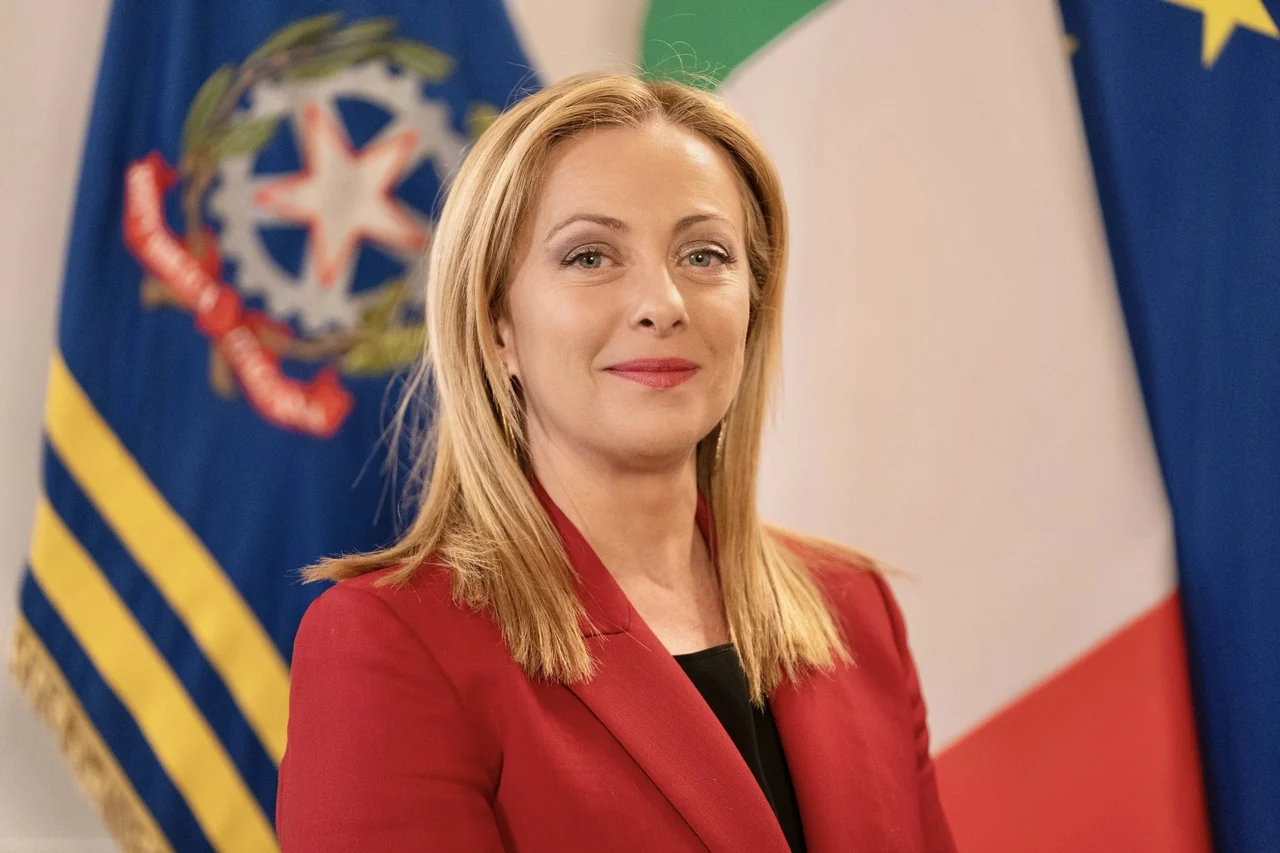
Giorgia Meloni Official 2023, 2023. Governo italiano / Wikimedia Commons. CC BY 3.0 Italy. Resized for display and cropped to fit. Homepage photographs also have a dark gradient and text overlay.

Carousel photograph credits and licences
- Wirestock Creators / Shutterstock.com
Wirestock Creators / Shutterstock.com. Giorgia Meloni speaking at an election rally in Turin on 13 September 2022. Archive context, not the September 2026 announcement.
Standard Image licence; Editorial Use Only. Cropped, resized and darkened for the carousel. - Studenti a scuola di Wikipedia (Potenza, 2017).jpg
Luigi Catalani / CC BY-SA 4.0. Pupils at a Wikipedia lesson in Potenza on 22 December 2017. Archive Italian school context, unrelated to the reported Monfalcone case or the 2026 rule.
CC BY-SA 4.0. Cropped, resized and darkened for the carousel. Original and photographic adaptation under CC BY-SA 4.0. Original photograph. - Hijab Niqab Veil.jpg
Hijabis4ever / CC BY-SA 3.0. Hijab and niqab displayed on mannequins, 2011. The left face is visible; the right lower face is covered. An explanatory garment photograph, not an Italian school case.
CC BY-SA 3.0 Unported. Cropped, resized and darkened for the carousel. Original and photographic adaptation under CC BY-SA 3.0 Unported. Original photograph. - Cortyn / Shutterstock.com
Cortyn / Shutterstock.com. Monfalcone town context, 28 December 2019. This archive photograph does not show the school or pupil in ANSA reporting.
Standard Image licence; Editorial Use Only. Cropped, resized and darkened for the carousel. - Aula del Liceo linguistico Sophie M. Scholl, Trento.jpg
GinevraBianchi. Archive classroom in Trento, photographed on 8 March 2022, unrelated to the pupil in ANSA's report; this photograph does not measure national prevalence.
CC BY-SA 4.0. Cropped, resized and darkened for the carousel. Original and photographic adaptation under CC BY-SA 4.0. - Close up hands using the calculator while writing
wavebreakmedia / Shutterstock.com. Illustrative photograph of anonymous hands using a calculator and writing. It does not show this investigation, a school count or an identifiable researcher.
Standard Image licence. Cropped, resized and darkened for the carousel.
.jpg)


These credits cover the carousel photographs. Original stock files are not distributed here. The logo remains separate brand artwork.
Research and production assisted by AI. Read our approach
Have evidence that could change this finding? Contact TALLYCAT01