
What the evidence shows
Recording some violent shop thefts as business robbery helps explain why recorded robbery rose while shoplifting fell. The national size of that recording effect remains unclear. Neither headline measures the change in every crime or in an individual's risk.
- Scale: police recorded 519,516 shoplifting offences, 10,820 fewer than the previous year's 530,336.
- Two robbery trends: business-property robbery rose 67%, while personal-property robbery fell 7%.
- Counting matters: April 2025 guidance clarified when violent shop theft should be recorded as business robbery. ONS says this helped raise robbery records and likely lowered shoplifting slightly.
By the numbers is the format for this explanation of supported official figures and their limits. It is not a finding that the ONS figures are false or that anyone deliberately misled the public.
Two different robbery trends
All the figures below count police-recorded offences in England and Wales over the same two 12-month periods. Breaking robbery into its two categories shows why the total can rise even when robbery of personal property falls.
Scroll across to see all columns
| Recorded offence | July 2024 to June 2025 | July 2025 to June 2026 | Change |
|---|---|---|---|
| Business-property robbery | 18,650 | 31,089 | +12,439 (+67%) |
| Personal-property robbery | 61,819 | 57,193 | 4,626 fewer (7% down) |
| All robbery | 80,469 | 88,282 | +7,813 (+10%) |
| Shoplifting | 530,336 | 519,516 | 10,820 fewer (2% down) |
Table sources: Office for National Statistics
Sources: Office for National Statistics
Business-property robbery rose by 12,439 offences. Personal-property robbery fell by 4,626. Together they produce the total robbery increase of 7,813. That arithmetic describes the records; it does not explain what caused the change.
Sources: Office for National Statistics
Business property is broader than shops. The rules cover property belonging to a business or corporate body regardless of where the robbery happens. Personal property is also a recording category, not a count of people who were robbed. Some business-owned items robbed from a person are treated as personal property under the rules.
Why violent shop theft should count as robbery
In April 2025, the Home Office clarified the instructions police use to record crime. If someone enters a shop, steals and uses or threatens violence, the incident should be recorded as business robbery. This includes violence or threats used to escape the premises with the stolen property.
Sources: Home Office via UK Government Web Archive
The escape condition matters. The guidance does not say that every violent act after a theft is automatically robbery. It says theft can be complete once someone has stolen and left without violence or threats, while immediate pursuit may mean the theft is still taking place.
Sources: Home Office via UK Government Web Archive
The earlier guidance already connected force used during and in order to commit theft with robbery. The April 2025 change is therefore a recording clarification. The documents do not establish that it created a new criminal offence.
Sources: Home Office via UK Government Web ArchiveHome Office via UK Government Web Archive
ONS says the clarification helped increase recorded business robbery and likely had a small effect lowering recorded shoplifting. The Home Office also explains that some incidents can be recorded more accurately as robbery instead of separate shoplifting and assault offences.
The counts do not isolate the recording effect
The mechanism is established, but its national size is not. We did not recover a national estimate separating the recording clarification from changes in offending or reporting. That is a gap in the recovered evidence, not proof that no estimate is held.
Sources: Office for National StatisticsOffice for National StatisticsHome Office
It would be wrong to say that all of the 67% business-robbery increase came from relabelling shoplifting. It would also be wrong to treat the full increase as evidence of more offending. Both interpretations go beyond what these totals establish.
Sources: Office for National Statistics
The comparison is not a clean before-and-after experiment. The earlier year already includes April, May and June 2025, after the clarification. The later year is wholly after it. Police forces may also have changed their practice at different times.
Sources: Office for National StatisticsHome Office via UK Government Web Archive
Adding shoplifting to every business robbery does not solve the problem. Business robbery includes more than retail theft, and the difference between two changing totals is not the number of reclassified incidents. A defensible estimate would need information such as consistent recording on the old and new basis, or an audit of affected cases.
Sources: Home Office via UK Government Web ArchiveOffice for National Statistics
What this means for shop theft and personal safety
A 2% fall still leaves 519,516 recorded shoplifting offences in one year. Police figures do not capture every incident. ONS describes low reporting of shoplifting and changes in retailers' engagement with police, so a change in recorded offences need not match the change in all shop theft.
Sources: Office for National Statistics
The 7% fall in personal-property robbery is useful context, but it does not tell each reader that their own risk fell by 7%. These are offence totals, not distinct victims or individual probabilities. Local patterns, exposure and unreported incidents are separate questions.
Sources: Office for National StatisticsOffice for National Statistics
The Crime Survey for England and Wales found no statistically significant annual change in its robbery estimate. That means its uncertainty is too large to establish a change, not that robbery definitely stayed constant. ONS prefers police records for robbery because the survey sample is small. The survey also does not measure crimes against businesses.
Sources: Office for National StatisticsOffice for National Statistics
What we still need to know
Checked: we checked official figures, annual changes and recording guidance. The totals support the recorded trends and the guidance supports a partial recording explanation.
Sources: Office for National StatisticsOffice for National StatisticsHome Office via UK Government Web Archive
Still unclear: how much of the change reflects recording rather than crime. No national causal count or percentage was recovered. We have not sent an enquiry and cannot report a reply or a promised answer.
Sources: Office for National StatisticsOffice for National StatisticsHome Office
Sources: Office for National Statistics
Technical notes: exact cells, rounding and source versions
The annual comparison uses the ONS appendix workbook released on 22 October 2026, downloaded on 23 October 2026 at 09:24:30 UTC. In Table A5a, columns AA and AB contain the matched earlier and later years; AC contains the percentage change. Business robbery is row 105, personal robbery row 106, total robbery row 107 and shoplifting row 126. Row 127 repeats the shoplifting subtotal and must not be added again.
Sources: Office for National Statistics
For each series, absolute change is the later count minus the earlier count. Percentage change is that difference divided by the earlier count, multiplied by 100. The results are 66.6971% for business robbery, minus 7.4831% for personal robbery, 9.7093% for all robbery and minus 2.0402% for shoplifting. Rounding to the nearest whole percentage gives 67%, minus 7%, 10% and minus 2%.
Sources: Office for National Statistics
Table A6 mixes March and June period labels, while the percentage-change header in A7 names different years. We therefore used the explicitly matched A5a periods and monthly checks. We did not use population rates from A7 to describe an individual's probability of being robbed.
Sources: Office for National Statistics
The decisive guidance is the 92-page April 2025 edition saved by the UK Government Web Archive on 30 April 2025 at 21:07:13 UTC. Rule 34A is on printed and PDF page 69. Some old government file links now redirect to the 2026 successor, so the archive version is essential for checking what the April 2025 edition said. The predecessor has 89 pages; its relevant pages are 67 and 73.
Sources: Home Office via UK Government Web ArchiveHome Office via UK Government Web Archive
What is established
- The annual counts and percentage changes match the ONS tables and reconcile to the monthly series.
- The archived April 2025 guidance establishes the recording mechanism, including violence or threats used to escape with stolen goods.
What remains unknown
- The national number or percentage of offences whose recording changed because of the clarification.
- How much of each annual change reflects offending, reporting, recording practice or a combination of these.
The story, in order
Earlier recording guidance
The 2024/25 edition already connected force used during and in order to commit theft with robbery.
Retail-theft recording clarification
The April 2025 edition added the relevant application wording to business-property robbery rule 34A.
End of the current annual comparison
The later 12 months run from 1 July 2025 to 30 June 2026; the earlier 12 months end on 30 June 2025.
ONS publishes the new figures
Recorded robbery rises 10% and shoplifting falls 2% in the matched annual comparison.
Evidence checked
Official totals, monthly reconciliation and the archived original guidance checked. No enquiry sent.
Next release listed by ONS
Publisher's stated next release date as checked on 23 October 2026. Update scheduled: 28 January. We will review the new ONS figures and prepare an update for approval. The publisher's date may change.
YOUR TURN TO CHECK
Reproduce this investigation
Check the published annual figures, repeat the arithmetic, then inspect the recording instruction that changes their interpretation.
You will need
A browser, a spreadsheet app and a PDF reader. Python 3 is optional for the supplied arithmetic script and needs no extra packages.
What you can and cannot repeat
These steps reproduce the published counts and calculation, not a causal estimate of the recording change. The supplied CSV contains four aggregate series, not individual cases or every crime incident. Original government links can redirect to newer guidance; use the dated archive version for April 2025.
Open the dated ONS release
Use Crime in England and Wales: year ending June 2026, published on 22 October 2026. Read sections 12 and 13. Expect robbery up 10% and shoplifting down 2%, with an explanation of the recording clarification and reporting limits.
Keep in mind The source was checked on 23 October 2026. An updating page or a later release is a different version.
Read the matched annual cells
Open the appendix workbook. In Table A5a, verify column AA is the year ending June 2025 and AB the year ending June 2026. Read business robbery row 105, personal robbery row 106, total robbery row 107 and shoplifting row 126. Expect 18,650 to 31,089; 61,819 to 57,193; 80,469 to 88,282; and 530,336 to 519,516.
Keep in mind These are England and Wales police-recorded offence totals. Do not add row 127, which repeats the shoplifting subtotal. Do not substitute the inconsistent A6/A7 period headers.
Calculate the changes
Subtract the earlier count from the later one. Divide that difference by the earlier count and multiply by 100. Round only at the end to the nearest whole percentage. Download the counts CSV and Python file into the same folder, then run the Python file if desired.
absolute change = later count - earlier count
percentage change = (later count - earlier count) / earlier count * 100
python recorded-robbery-shoplifting-counting-change-recalculate.py
Keep in mind Expected rounded changes are +67%, minus 7%, +10% and minus 2%. A percentage change uses the earlier count as its denominator; it is not a percentage-point change or a personal-risk probability.
Reconcile the monthly entries
In Table A5b, find the same business robbery, personal robbery and shoplifting series. Sum July 2024 through June 2025, then July 2025 through June 2026. Each set of 12 months should equal its corresponding A5a annual total. For each year, business robbery plus personal robbery should equal total robbery.
18,650 + 61,819 = 80,469 31,089 + 57,193 = 88,282Keep in mind Matching annual and monthly sums checks extraction and arithmetic. It does not establish why the records changed.
Read the original April 2025 rule
Use the official archive capture dated 30 April 2025, 21:07:13 UTC, rather than a government URL that now redirects. In the 92-page PDF, read printed/PDF page 69, rule 34A, Application of the Rule and the following paragraph. Check the condition about using violence or threats to escape with the stolen property.
Keep in mind The preceding 2024/25 edition has 89 pages. Compare pages 67 and 73. The earlier force-during-theft rule is why this article describes a recording clarification, not a new offence.
Keep the unresolved question separate
Read ONS section 12, user-guide section 5.7 and Home Office outcomes section 2.6. They support a recording contribution but provide no recovered national count of its size. The comparison year already contains three months after April 2025; the later year is wholly after it.
Keep in mind Do not calculate a reclassification count by subtracting the category changes, and do not treat business robbery plus shoplifting as all national retail crime. No enquiry was sent. Update scheduled: 28 January, for review and preparation before publication approval.
Sources you can check
- Crime in England and Wales: year ending June 2026Office for National Statistics / 22 October 2026Sections 12 and 13: robbery, shoplifting, recording clarification and reporting limits; release metadata lists the next release.
- Crime in England and Wales appendix tables, year ending June 2026Office for National Statistics / 22 October 2026Table A5a AA:AC, rows 105, 106, 107 and 126; monthly reconciliation in A5b; notes A5 to A7, note 37.
- Crime Recording Rules for Front line Officers and Staff 2025/26, April 2025 updateHome Office via UK Government Web Archive / 2025-04Original April 2025 version: printed/PDF page 69, rule 34A and its Application of the Rule; 34B category definition.
- Crime Recording Rules for Front line Officers and Staff 2024/25, August 2024 updateHome Office via UK Government Web Archive / 2024-08Predecessor comparison: pages 67 and 73. Helps distinguish a recording clarification from a newly created offence.
- User guide to crime statistics for England and WalesOffice for National Statistics / 2026-03Section 5.7: robbery measurement, survey limits and the recording clarification. No numerical attribution of the recording effect was recovered in that section.
- Crime outcomes in England and Wales 2025 to 2026Home Office / 2026Section 2.6 explains improved robbery recording instead of separate shoplifting and assault records. It does not quantify the national share of the increase caused by that change.
- Open Government Licence v3.0The National ArchivesLicence for applicable public sector information. Separate photographic rights and third-party material are excluded.
We checked the ONS release, matched annual and monthly tables, and the original April 2025 Home Office guidance recovered from the UK Government Web Archive. The source files and arithmetic were independently reviewed on 23 October 2026. We did not estimate a causal split or individual risk. No enquiry has been sent. Update scheduled: 28 January, for review and preparation before publication approval. Contains public sector information licensed under the Open Government Licence v3.0 where applicable. Photographs have separate rights.
Inspect the evidence
Source notes include the links and verification limits. The timeline opens in Excel or any spreadsheet app.
Photo credit and licence
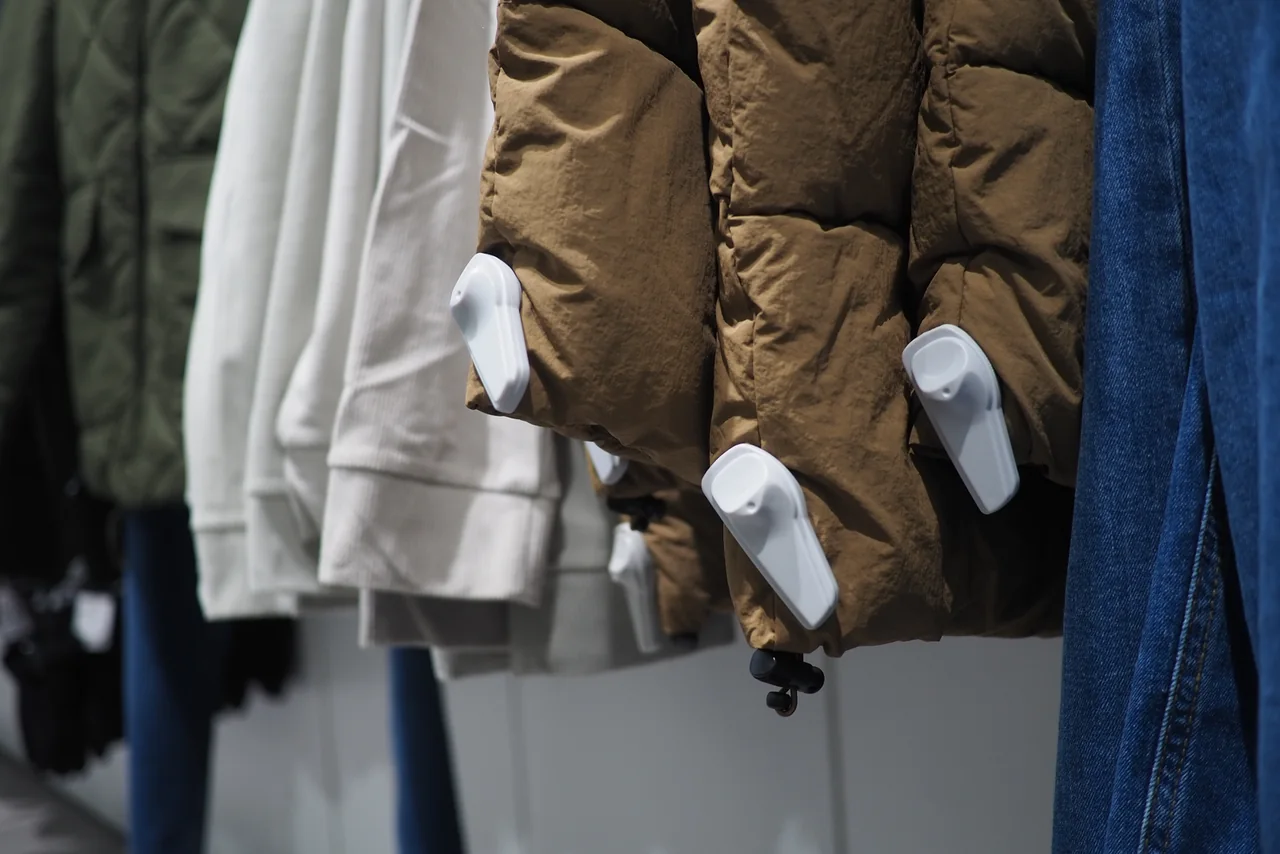
security tags on cloths on display in a retail store. Towfiqu ahamed barbhuiya/Shutterstock.com. Shutterstock Standard Image licence. Illustrative retail security tags. Not an incident or named shop. Capture date and location unknown. Proportionally resized and compressed for the article; the homepage uses a responsive crop, lower dark fade and editorial text. The sharing image crops the photograph and places text beside it. No scene alteration. The original stock photograph is not distributed. The separate TALLYCAT01 logo remains brand artwork.
Carousel photograph credits and licences
- Slide 1: security tags on cloths on display in a retail store
Towfiqu ahamed barbhuiya/Shutterstock.com. Illustrative retail security tags. Not an incident or named shop. Capture date and location unknown.
Shutterstock Standard Image licence, main-library photograph. Cropped, resized and darkened for the carousel. - Slide 2: Empty cash drawer
ESB Basic/Shutterstock.com. Illustrative empty shop till. It does not show a robbery or a particular retailer. Capture date and location unknown.
Shutterstock Standard Image licence, main-library photograph. Cropped, resized and darkened for the carousel. - Slide 3: Green shopping baskets stacked at a supermarket entrance, representing retail and consumerism
Alfonso Soler/Shutterstock.com. Illustrative shop trolleys. Not a crime scene or measure of theft at this shop. Capture date and location unknown. Vendor title calls these baskets; original pixels show trolley handles and coin locks.
Shutterstock Standard Image licence, main-library photograph. Cropped, resized and darkened for the carousel. - Slide 4: Keys and wallet on a table next to a mobile phone
Towfiqu ahamed barbhuiya/Shutterstock.com. Illustrative personal belongings. Not stolen property or a victim scene. Capture date and location unknown.
Shutterstock Standard Image licence, main-library photograph. Cropped, resized and darkened for the carousel. - Slide 5: Panic button of an alarm system keypad
shutterpix/Shutterstock.com. Illustrative security-alarm panic button. No claim it is installed in a shop or was activated in any incident. Capture date and location unknown.
Shutterstock Standard Image licence, main-library photograph. Cropped, resized and darkened for the carousel. - Slide 6: Pedestrians moving along an urban pavement, showing a diverse range of footwear and contemporary clothing styles
Luis Rojas Estudio/Shutterstock.com. Illustrative pedestrians. They are not presented as victims or suspects. No UK location or individual risk is asserted. Capture date and location unknown.
Shutterstock Standard Image licence, main-library photograph. Cropped, resized and darkened for the carousel. - Slide 7: Checklist concept - checklist, paper and a pen with checklist word on wooden table
Achira22/Shutterstock.com. Illustrative unfilled checklist. Not an ONS form or a record of this investigation. Capture date and location unknown.
Shutterstock Standard Image licence, main-library photograph. Cropped, resized and darkened for the carousel. - Slide 8: Open laptop on a wooden table, next to glasses on a stack of books on the terrace of a country house on a summer day
Olezzo/Shutterstock.com. Illustrative reading setup. Not the TALLYCAT01 website or an ONS workplace. Capture date and location unknown.
Shutterstock Standard Image licence, main-library photograph. Cropped, resized and darkened for the carousel.
These credits cover the carousel photographs. Original stock files are not distributed here. The logo remains separate brand artwork.
Research and production assisted by AI. Read our approach
Have evidence that could change this finding? Contact TALLYCAT01