
What the evidence shows
The proposed bank-card option would remove the photo check for people using it. The elections watchdog warns that this weakens security. Past fraud allegations and voter-ID access figures do not tell us whether fraud would rise under the change.
- The proposal is not yet law. It directly concerns UK parliamentary elections, including general elections and by-elections, in England, Scotland and Wales; Northern Ireland’s rules are unchanged.
- Seven 2024 polling-station allegations were recorded across UK elections. They are not seven proven offences.
- About 16,000 voters did not return with accepted ID after being turned away at the 2024 general election in Great Britain.
- These figures have different units and election coverage. They do not measure the same problem or predict the new policy’s effect.
What did Reform UK claim?
Reform UK’s 11 October Instagram post says accepting bank cards would weaken voter-ID checks. Its caption also accuses Labour of trying to rig election rules.
Those are different claims. The security concern has a basis in the proposed rules and the watchdog’s warning. An allegation about dishonest political intent needs separate evidence.
What would change at the polling station?
Under the proposal, a voter could choose a qualifying bank card instead of photo ID. The card must be physical, unexpired and issued by a bank or card provider authorised in the UK. It must show the voter’s first name or first initial and surname, and its expiry date must be visible.
A bank card does not need a photograph. For voters using that option, polling staff would therefore lose the photo comparison. Identification is not abolished, and accepted photo documents remain an option.
This provision directly changes identification for UK parliamentary elections, including general elections and by-elections, in England, Scotland and Wales. Northern Ireland’s rules are unchanged. Corresponding changes to other elections would need further regulations. The bill is still a proposal, not an enacted rule.
Sources: UK ParliamentUK Parliament
Why is the elections watchdog worried?
The Electoral Commission oversees elections and regulates political finance. It warns that the bank-card option weakens security because a photo helps polling staff compare the person in front of them with the named document.
The warning is a reason to examine the policy. It is not a forecast that fraud would rise by a particular amount, nor evidence that politicians want fraud to occur.
Sources: Electoral Commission
What do the seven allegations mean?
The Commission’s 2024 workbook records seven polling-station allegations in its personation category. Personation means voting as someone else. Five entries concern the general election and two concern local elections.
| Recorded outcome | Entries | Election coverage |
|---|---|---|
| No offence found | 3 | Part of the seven entries |
| Insufficient evidence | 2 | Part of the seven entries |
| No evidence found | 1 | Part of the seven entries |
| Locally resolved with police advice | 1 | Part of the seven entries |
| Total | 7 | 5 general-election entries; 2 local-election entries |
Six ended without further police action. The other was recorded as locally resolved, with police advice. These are reported entries and recorded outcomes, not seven proven offences or seven identified fraudulent votes.
The latest recovered annual file, for 2025, records three personation entries, all involving postal votes, and none at polling stations. Reporting files can include cases linked to earlier elections, so the two years are not a clean before-and-after comparison.
Sources: Electoral CommissionElectoral CommissionUK Parliament / Electoral Commission
What happened to voters without accepted ID?
At the 2024 general election, around 50,000 voters were initially turned away for not showing accepted ID. Around 16,000 did not return with accepted ID by the close of polling.
These are approximate Great Britain figures based on records returned by 612 of 632 constituencies. They do not count everyone discouraged from trying to vote, including people who stayed home.
The seven allegations cover UK elections, while the 16,000 estimate concerns Great Britain’s general election. One counts allegation entries; the other estimates voters recorded as not returning with accepted ID. Dividing one by the other would not show the rule’s benefit or cost.
Why the figures cannot predict the new rules
Photo-ID rules were already in place when the 2024 records were collected. Few detected allegations might mean fraud was uncommon, the rule discouraged it, detection was incomplete, or some combination of those explanations.
An organised attempt could matter in a close election even if the national count was small. Equally, a security concern does not tell us how many genuine voters would find the proposed card option useful.
The historical records cannot establish whether fraud would increase under bank-card rules. They also do not establish an intention to rig election rules.
Sources: Electoral CommissionElectoral CommissionElectoral CommissionElectoral Commission
What about claims that the law is being rushed?
The bank-card idea was publicly announced in July 2025. It was not invented during October 2026 speculation about an early election.
A 10 October Telegraph report used in Reform’s artwork says Lords scrutiny would be cut from ten days to fewer than five. We recovered the report, but not a primary record confirming that specific change. The earlier policy announcement does not disprove a later attempt to speed up scrutiny.
As checked on 14 October 2026, Parliament’s public stages page did not give a Lords committee date. That tells us the published procedural position, not what may have been discussed privately.
Sources: UK GovernmentCamilla Turner / The Telegraph, syndicated by AOLUK ParliamentHouse of Commons Library
What we still need to know
Checked: the proposed bank-card route, the watchdog’s warning and the narrow historical figures.
Still unclear: the final rules’ effect on fraud and access to voting, and primary confirmation of the reported scrutiny timetable change.
Next update: the final law and new fraud figures would let us revisit the evidence. Focused clarification enquiries are drafted but have not been sent, and no reminder is configured.
Technical notes: exact rows, outcomes and source differences
In the 2024 workbook, the relevant rows are Sheet1 rows 4, 176, 189, 223, 279, 284 and 353. Column D contains the offence category, E the outcome and F the election. The full combined category is “60-62 and 62A Personation/legal incapacity to vote/multiple voting (i) Polling station”. The Commission’s official summary and letter describe these seven as personation allegations.
In the 2025 workbook, personation appears on rows 144, 151 and 198. Column C contains the offence, D the outcome and E the election. All three are postal entries: one conviction, one still under investigation and one with no further action.
The seven matched allegations agree across the workbook, webpage and official letter. Some unrelated category totals and 2025 percentages differ between raw files and summary webpages. We have not silently corrected those sources or used disputed totals in the headline. The source notes list the discrepancies for anyone repeating the check.
Recorded outcomes are a reporting snapshot. We do not claim that no case connected to a 2024 election could later lead to a conviction. No count of detected allegations can include every undetected attempt.
Sources: Electoral CommissionElectoral CommissionUK Parliament / Electoral Commission
What is established
- A qualifying physical, unexpired bank card would be accepted under the proposal.
- The Electoral Commission explicitly warns that the non-photo option weakens security.
- The original fraud workbooks and voter-ID report support the narrow historical figures reported here.
What remains unknown
- How the final rules would affect fraud and people’s ability to vote.
- Whether the reported reduction in Lords scrutiny days is confirmed by an official timetable or allocation record.
- The available evidence does not establish an intention to rig election rules. That motive has not been disproved either.
- Two focused clarification enquiries are drafted but unsent. No update reminder is configured for this article.
The story, in order
General election under photo-ID rules
The later voter-ID report estimates records of voters turned away and not returning with accepted ID.
Bank-card plan publicly announced
The government’s elections strategy describes expanding accepted identification.
Bill introduced
The proposal starts its public parliamentary route.
Bill reaches the Lords
HL Bill 47 includes the proposed bank-card route in clause 48.
Watchdog warns about weaker security
The Electoral Commission publishes its Lords briefing.
Reform UK publishes its Instagram post
The post combines a supported security concern with an allegation about rigging election rules.
Evidence checked for this article
The Lords committee date is not yet shown on the inspected stages page; the final policy’s effect remains unknown.
YOUR TURN TO CHECK
Reproduce this investigation
Repeat the policy check and the narrow historical counts. Start with the original documents rather than a screenshot or a summary article.
You will need
A web browser, a spreadsheet app and a PDF reader. Python with openpyxl is optional for the calculation script.
What you can and cannot repeat
The original numerical files were recovered, but the complete bill download was challenged. Relevant legislative text was recovered and cross-checked against the explanatory notes. Historical records cannot reproduce a future policy effect or prove political intent. Download original Commission files directly from the official source links below; the local CSVs and calculations are our selected extracts, not replacement originals.
Separate the two claims
Read Reform’s original post. Write down the bank-card security claim separately from its allegation about rigging election rules. Record its 11 October 2026 date.
Keep in mind We do not treat an attribution link as permission to republish the whole post or its photographs.
Read the actual proposed card conditions
Open clause 48 of HL Bill 47 and the explanatory notes, paragraphs 479 to 487. Confirm that the card must be physical, unexpired, from a qualifying UK-authorised issuer and show first name or initial plus surname with a visible expiry date. Check the retained photo-ID route and Great Britain parliamentary-election scope, including by-elections.
Keep in mind This is a proposed rule. Northern Ireland is unchanged; other election changes would require further regulations.
Read the security warning in context
In the Commission’s Lords briefing, find Part 3 and Bank cards as voter ID. Identify the concern about losing the photo match. Keep that warning separate from a quantified prediction or a claim about motive.
Download the original 2024 fraud workbook
Open Electoral fraud data 2024.xlsx. In Sheet1 inspect column D. Filter for the polling-station personation category, then inspect rows 4, 176, 189, 223, 279, 284 and 353. Count seven entries.
Keep in mind Do not count all fraud categories as polling-station personation, or treat the seven entries as proved offences.
Check the seven outcomes and election types
Read column E for those seven rows: six no-further-action entries and one locally resolved. Inspect column F: five general-election entries and two local-election entries. Compare the selected-row CSV with the original workbook and the official letter.
Keep in mind The locally resolved entry records police advice. Recorded outcomes are a reporting snapshot.
Check the newer annual file without inventing a trend
Open Electoral fraud data 2025.xlsx. In Sheet1 inspect columns C, D and E at rows 144, 151 and 198. All three personation entries concern postal votes; no polling-station personation entries are recorded.
Keep in mind Annual reporting files include some cases tied to earlier elections. They are not separate election-year cohorts.
Find the estimate of voters not returning with ID
Open the original voter-ID report. On printed page 11, Table 1, find the approximate 50,000 initially turned away and 16,000 who did not return with accepted ID. Read the limitations on printed pages 12 to 15.
Keep in mind The estimate covers Great Britain’s general election and records from 612 of 632 constituencies. It does not count everyone who stayed home or prove how much turnout the rule changed.
Re-run the calculations and keep the limits visible
Download our script package and extract it into a new folder. Download the two original workbooks into that folder using their original filenames, install openpyxl if needed, then run audit_calculations.py. Compare its row counts with the calculation record and selected-row CSVs.
python audit_calculations.pyKeep in mind Do not divide seven UK allegation entries by 16,000 estimated Great Britain general-election voters as if they measured the same outcome. The check cannot forecast the bank-card policy’s effect.
Check the parliamentary timetable
Open the official stages page and compare its current status with this article’s 14 October 2026 snapshot. A new formal allocation record could settle the scrutiny-days question; a missing date does not prove what was privately agreed.
Sources you can check
- Reform UK voter-ID postReform UK on Instagram / 11 October 2026Original claim, inspected directly; post timestamp 11 October 2026 at 14:37:52 UTC.
- Representation of the People Bill, HL Bill 47, clause 48UK Parliament / 3 September 2026Operative proposed bank-card conditions and retained photo-ID route.
- Lords explanatory notes, paragraphs 479 to 487UK Parliament / 5 October 2026Explains permitted physical cards, issuer, name, expiry and election scope.
- Representation of the People Bill: Lords second-reading briefingElectoral Commission / 14 September 2026The independent elections watchdog explicitly warns that bank cards weaken security.
- Electoral fraud data 2024, original workbookElectoral CommissionOriginal allegation-entry data; seven polling-station personation entries and their recorded outcomes.
- Electoral fraud data 2025, original workbookElectoral CommissionLatest recovered annual file, including three postal personation entries.
- Voter ID at the 2024 general election, original reportElectoral CommissionApproximate numbers initially turned away and not returning with accepted ID.
- Electoral Commission letter on 2024 fraud allegationsUK Parliament / Electoral Commission / 31 March 2025Independent official corroboration of the seven polling-station personation allegations and outcomes.
- Restoring trust in our democracy: elections strategyUK Government / 17 July 2025Bank-card policy publicly announced before October 2026 election speculation.
- Representation of the People Bill: official stagesUK ParliamentPublic record of the bill moving through Parliament.
- Representation of the People Bill 2025-26House of Commons LibraryExplains the bill and the public parliamentary sequence.
- Burnham rushes to axe photo ID checks at electionsCamilla Turner / The Telegraph, syndicated by AOL / 10 October 2026Underlying report used in Reform’s artwork, including claims about shorter Lords scrutiny.
- Voter-ID pilots: confidence assessment and findingsElectoral CommissionEarlier evaluation context and the limits of forecasting fraud from observed counts.
We inspected Reform’s original post, the relevant bill clause and explanatory notes, the watchdog’s warning, the public parliamentary record, two original fraud workbooks and the original voter-ID report. We reproduced selected spreadsheet rows without changing the originals. Links identify original sources separately from our calculations. This is a limited policy-and-data explanation, not a forecast of future fraud.
Inspect the evidence
Source notes include the links and verification limits. The timeline opens in Excel or any spreadsheet app.
Photo credit and licence
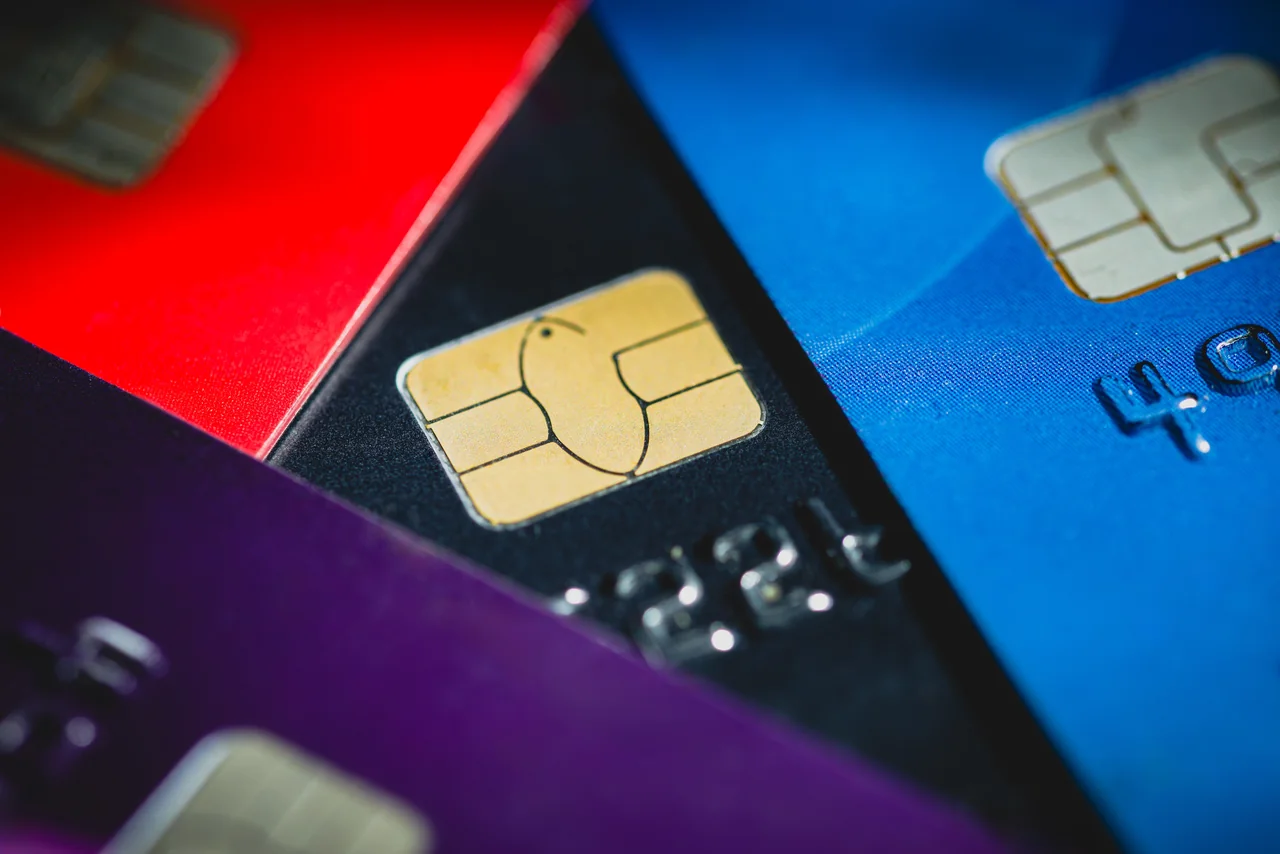
Stacked physical bank cards with chips, macro photograph. Yalcin Sonat/Shutterstock.com. Shutterstock Standard Image License, Unlimited plan. Capture date not supplied. Resized and cropped for display. The homepage also uses a dark gradient and text overlay. The original stock file is not offered as a download.
Carousel photograph credits and licences
- Slide 1: Stacked credit cards with chip, close up view with selective focus for background
Yalcin Sonat/Shutterstock.com. Capture date and place are not established. Uploaded on 26 August 2023. Generic bank-card illustration; not an accepted voter-ID specimen, a polling station or future fraud.
Shutterstock Standard Image Licence. Cropped, resized and darkened for the carousel. This stock photograph and its adapted slide remain under the Shutterstock Standard Image Licence. They are not offered under a Creative Commons licence, and the stock original is not distributed here. - Slide 2: Nigel Farage 2024
Owain.davies. Nigel Farage at a Reform rally at Trago Mills, Devon, on 24 June 2024. Archive party context; not the October 2026 post or evidence that Farage wrote its caption.
CC BY-SA 4.0. Cropped, resized and darkened for the carousel. The photograph and flattened adapted carousel slide are offered under CC BY-SA 4.0. No additional restriction is imposed on that adaptation. The separate TALLYCAT01 logo and third-party marks remain separately protected; this notice does not license other photographs or proprietary stock covers. - Slide 3: Lloyds Bank Visa Debit card
JeppaG4. Photographed on 3 October 2025. A redacted archive Lloyds debit-card design; name and expiry cannot be checked, so no claim is made that this card would qualify as voter ID.
CC0 1.0. Cropped, resized and darkened for the carousel. - Slide 4: Blue British passport on blue background close up. Tourism and citizenship concept
Mehaniq/Shutterstock.com. Closed blue British passport on a blue surface. Capture date and exact location are not established. Object illustration only; it does not show the photo page, a voter, an actual identity check or document validity.
Shutterstock Standard Image Licence. Cropped, resized and darkened for the carousel. This stock photograph and its adapted slide remain under the Shutterstock Standard Image Licence. They are not offered under a Creative Commons licence, and the stock original is not distributed here. - Slide 5: Close up of illuminated blue emergency lights on the roof of a British police vehicle with high visibility yellow markings and a marked police van with rear doors open behind
Go My Media/Shutterstock.com. Blue emergency lights on a British police vehicle, with a marked vehicle behind. Capture date and exact location are not established. Policing illustration; not any of the seven 2024 allegations, an arrest or evidence of guilt.
Shutterstock Standard Image Licence. Cropped, resized and darkened for the carousel. This stock photograph and its adapted slide remain under the Shutterstock Standard Image Licence. They are not offered under a Creative Commons licence, and the stock original is not distributed here. - Slide 6: Brookfield Primary School as a polling station
Bondegezou. Brookfield Primary School used as a polling station on 4 July 2024, England. Documentary election-day context; not an ID rejection or any of the estimated 16,000 voters. The original file page does not establish the city.
CC BY-SA 4.0. Cropped, resized and darkened for the carousel. The photograph and flattened adapted carousel slide are offered under CC BY-SA 4.0. No additional restriction is imposed on that adaptation. The separate TALLYCAT01 logo and third-party marks remain separately protected; this notice does not license other photographs or proprietary stock covers. - Slide 7: Cyfrif Etholiad y Cynulliad West Clwyd and Aberconwy Count National Assembly Election 2016 01
Llywelyn2000. West Clwyd and Aberconwy count for the Welsh National Assembly election, 5 May 2016. Archive counting process; not 2024 data collection, bank-card voting, an ID rejection or future fraud. No pictured worker is accused of dishonesty.
CC BY-SA 4.0. Cropped, resized and darkened for the carousel. The photograph and flattened adapted carousel slide are offered under CC BY-SA 4.0. No additional restriction is imposed on that adaptation. The separate TALLYCAT01 logo and third-party marks remain separately protected; this notice does not license other photographs or proprietary stock covers. - Slide 8: House of Lords - November 2007
Herry Lawford. House of Lords chamber photographed on 8 November 2007. Archive legislative context; not a current sitting, a vote on this bill, its passage or its final wording. It does not establish any legislator’s position.
CC BY 2.0. Cropped, resized and darkened for the carousel. - Slide 9: Ballot paper for the 2022 Scottish local elections (Glasgow, Victoria Park ward)
Stv59. Unmarked Glasgow City Council Victoria Park ward ballot photographed on 16 April 2022. Archive ranked-choice local-election ballot; not a parliamentary ballot, submitted vote, fraud event or eligibility record. No candidate or party is presented as preferred.
CC BY-SA 4.0. Cropped, resized and darkened for the carousel. The photograph and flattened adapted carousel slide are offered under CC BY-SA 4.0. No additional restriction is imposed on that adaptation. The separate TALLYCAT01 logo and third-party marks remain separately protected; this notice does not license other photographs or proprietary stock covers. The photograph’s EXIF orientation was corrected for display before crop, resize, fade and editorial text overlay.


.jpg)
These credits cover the carousel photographs. Original stock files are not distributed here. The logo remains separate brand artwork.
Research and production assisted by AI. Read our approach
Have evidence that could change this finding? Contact TALLYCAT01